|
|
Mozart's The Magic Flute(Die Zauberflöte) |
|
|
|
This site is under construction and was last revised on: 21 November 2011
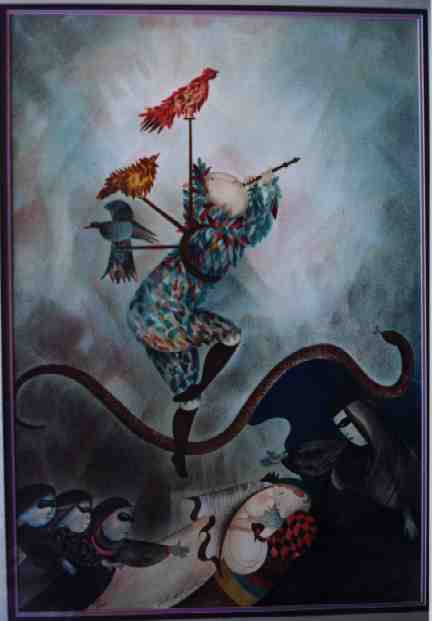
Purpose of this Website In my opinion, Wolfgang Amadeus Mozart's opera The Magic Flute (Die Zauberflöte) is the greatest work of esoteric music ever written. In accordance with the teachings of one of Mozart's mentors, Ignaz von Born (1742-1791), the opera was written to be understood at three levels of meaning. These three levels may be defined as follows: 1) an Exoteric or popular level; 2) a Mesoteric or Masonic level; and 3) an Esoteric or Rosicrucian level. At the highest or esoteric level, the opera is an alchemical allegory, i.e., an 18th century Enlightenment version of the ancient Egyptian Mysteries concerning the achievement of illumination, a higher state of consciousness which the 20th century "Fourth Way" teacher, G. I. Gurdjieff (1867-1949), would call objective consciousness. The main purpose of this website is to explore the possible meanings of Die Zauberflöte at all three levels, but with particular emphasis on the esoteric interpretation. Contents
Notable Quotations Concerning "the Magic Flute" Alchemical imagery is one way of telling ... the journey of the mythic hero, in terms of getting the gold out of the base matter. The gold is captured in base matter: prima materia. And though the alchemical cooking and whatever else they're doing, pouring things in and so forth, the gold is brought out. And the gold is your own spiritual life that is clouded in the pure matter of your physical interests. The operation of the mythic meditation is to bring out, elicit, the gold of your spiritual character. You have to move into this slowly, and that's what ordeals are. The ordeal is a gradual clarification and purification of your life. -- Joseph Campbell, The Hero's Journey (1990).
The Magic Flute is the standard Joseph Campbell hero's journey, and there is this duality of the natural, wild world versus the regimented world of the temple. -- Nadya Geras-Carson, Theatrical Set Designer, Eugene Opera.
The Magic Flute is ... not just an
allegory of the eighteenth-century struggle between Catholicism and Freemasonry;
it is an imaginative description of something much older and more important – of
humankind’s primeval progression from nature to culture, from unreason to
reason, and from matriarchy to patriarchy. Man’s first deities, so far as we can
tell, were not father-gods but mother-goddesses. In our oldest mythologies,
Mother Earth antedates Father Sky. Gaia is older than Uranus. The first social
groups were familial and tribal. Taboos, spells, and magic were important for
them. Only when, inevitably, there was contact and conflict with outsiders was
there a slow, painful movement towards larger communities. Magic was then
replaced with ritual. Taboo gave way to morality. The family circle recognized
the rights of a wider civilization. And the mother-goddess yielded to a father
god. -- Father Owen Lee, The Metropolitan Opera Guild.
Many scientists, even though music lovers, are probably unaware of the intimate links between the early history of the sciences and Mozart's last opera and perhaps Magnum Opus, The Magic Flute. Over two hundred years ago, in the year of his early death in 1791 at the age of 35, Mozart and the impresario and actor-manager Emanuel Schikaneder, collaborated to create one of the best-loved works in the operatic repertoire, but one which has provided numerous puzzles of interpretation and meaning ever since. The work is seen by many commentators as occupying a pivotal and influential position at or near the transition from the classical movement to the romantic movement in the arts. The last two decades of the 18th Century also saw the establishment of scientific mineralogy, chemistry and geology following the demise of alchemy and speculative Hermetic philosophy over the same period. Above all, the Enlightenment at the close of the 18th Century saw the breakdown of the old social order of the ancien regime and the establishment of republics in what had been monarchies in former times. No less mysterious than the actual meaning of this magical opera is the question of whether Mozart and Schikaneder might have had the assistance of other collaborators. It is suggested here that the opera fundamentally is about the alchemical process, that is about what was at that time the contemporary, but declining scientific paradigm. It is also suggested that the creation of the work may well be a collaborative effort between several people including scientists and that the storyline may well have been strongly influenced by contemporary scientific research on amalgamation procedures. ... The alchemical process as described by the secretive medieval alchemists and later proto-scientists began with the search for the first matter or prima materia, invariably symbolized as a serpent, snake, dragon or lion. In alchemical terms, the slaying of the dragon was the first procedure to be undertaken followed by blackness (nigredo) and the appearance of the Crow's Head. After many dissolutions and coagulations (solve et coagula) the appearance of white birds such as the dove symbolized the arrival of the white stage (albedo) of the work. After more laboratory procedures involving washings, purifications and eventual prolonged heating, the multi-colored stage of the peacock's tail (cauda pavonis) appeared and eventually the gold or red (rubedo) stage was achieved with the production of the Philosophers' Stone. Often the latter stages of the process were accompanied by descriptions and symbols of trees and flowers (commonly roses). – Alfred Whittaker, British Geological Survey, Lecture to the Austrian Mineralogical Society in Vienna on 13 October 1998.
Die Zauberflöte has transcended its makers and time itself. ... The way in which the makers of the opera have managed to marry ingenuity with creativity is astonishing. On the stage in Die Zauberflöte there are three temples, of Nature, Reason and Wisdom. In retrospect I now know that before I embarked on my journey to the roots of Die Zauberflöte, I had mainly listened to the opera in the Temple of Nature as it were, that while performing the study I enjoyed it in the Temple of Reason, and I hope that in the future I will one day be able to experience the "canticum canticorum" [song of songs] in the Temple of Wisdom. -- M.F.M. van den Berk, Die Zauberflöte. An Alchemical Allegory, pages 508-509, first published in 2004.
We are told that Mozart's Magic Flute embodies some of his beliefs as a Freemason. If so, we might have in this opera a translation into poetic and musical imagery of the theme of the good religion of the Egyptians, of the mysteries of Isis and Osiris into which the good are initiated, of the magical atmosphere through which human souls make their way to a Hermetic-Egyptian salvation. The name "Zarastro" of the head priest would reflect the equation of Zoroaster with Hermes Trismegistus in Renaissance genealogies of wisdom. -- Frances A. Yates, Giordano Bruno and the Hermetic Tradition, pages 415-416, first published in 1964.
"It is enough that the crowd would find pleasure in seeing the spectacle; at the same time, its high significance will not escape the initiates." -- Comment made by Johann Wolfgang von Goethe regarding The Magic Flute.
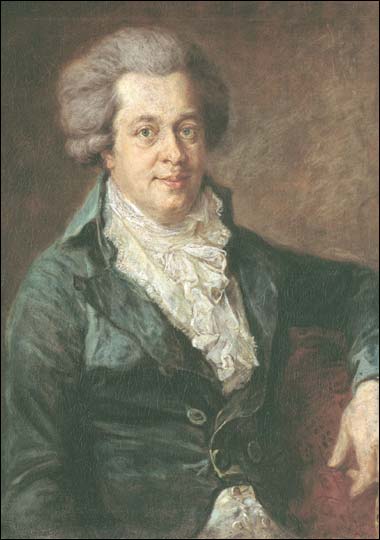
Nothing can be said here about Mozart's brilliance that has not been said a thousand times before. He was irrefutably the greatest musical genius in his time, perhaps of all times. His short and turbulent life embraced the latter part of the eighteenth century, a time marred by wars, revolutions and overall political chaos in Europe. The quiet, peaceful sanctuary of a Masonic lodge would understandably impress and inspire a man of Mozart's temperament. Interestingly, there was a division within the Austrian government regarding Freemasonry at that time. The lodge of which Francis of Lorraine was Grand Master was closed by order of his wife, the Empress Maria Theresa. However, Joseph II, the enlightened son of the Empress was a firm believer in religious tolerance and looked benevolently upon the Order for most of his reign. It has been suggested that the characters in The Magic Flute represented real people who were involved in Viennese Freemasonry; the prince was the Emperor Joseph II., the princess the Austrian people, the high priest supposedly represented one Ignatz von Born, head of the Viennese lodge and the Queen of the Night was the Empress Maria Theresa who organized the raid on her husband's lodge. Of course this is all speculation, but it does have interesting possibilities. ... Egyptian mythology ... permeates the opera. ... a kind of musical worship ... [of] Isis and Osiris, ... gods of Egypt's Old Kingdom. The Magic Flute was a 'Singspiel', that is, a musical comedy with some serious parts whose main attractions were impressive stage machinery and lavish special effects. (There are 13 elaborate scene changes in all). The libretto, which underwent several changes, was in the main written by Mozart's good friend and fellow Mason Johann Josef Schikaneder. At the time he met Mozart, Schikaneder was already an accomplished writer of such genres. Posterity has often been unkind to this man. He is often referred to as a buffoon, spendthrift and mediocre artist. Although we cannot defend the first two accusations, the latter is in fact quite untrue. Schnikaneder was one of the most famous Hamlets and King Lears of his day, a fact which prompted Joseph II to call Schnikaneder's theatrical company from Pressburg to Vienna. At first, the libretto of the opera seems almost childish and resembles an absurd fairy tale which another composer may have thought most inappropriate to set to music. Mozart however, realizing the possibility of combining the ridiculous with the sublime, wedded the words to such marvellous music that the final work of art was, and is, an unforgettable experience for opera lovers everywhere. He combines the four cardinal virtues of Wisdom, Fortitude, Temperance and Justice with the three Christian virtues of Faith, Hope and Charity to such an extent as to create a musical masterpiece which is cosmic in its depth. At its core burns Mozart's belief in the vital power and importance of love which triumphs over the fear of death at all levels of humanity. -- Gerlinde Sabathy-Judd, University of Western Ontario, Newsletter of the Grand Lodge of Canada, Province of Ontario, Volume 6, Number 3, Winter 1987.
Just as every age looked at Mozart through its own, sometimes distorting, spectacles, in the same way every age looked for and found its own ideas, desires and aspirations in The Magic Flute. One found it to be a naively popular, colorful fairy-tale; for another it was a historical allegory; for a third the eternal mystical struggle between light and darkness; a fourth saw in it mankind's striving towards the knowledge of truth; a fifth thought it to be an ancient Egyptian ritual; for a sixth it was a freemason's symbolic ceremony; while for the audience of the Viennese premiere, it was a political pamphlet, a musical social satire, in which the spirit of the "good emperor," Joseph II, liberates the Austrian people from the hateful despotism of the wicked Queen of the Night, Maria Theresa. Dozens of different and antagonistic views -- which of them is correct? None of them -- and all of them. The Magic Flute is like a mirror: anyone who looks into it, sees himself; and he will find in it whatever he is looking for. It is a complete picture of life, a mirror of the universe; in the beautiful words of Bruno Walter: "Mozart's spiritual testament." -- Janos Liebner, Artistic Director of the Berlin Opera, in his book entitled: Mozart on the Stage, first published in 1972. |
| Part Number | Mozart's Musical Part Name | Libretto Act | Libretto Scene | Compact Disc Track Numbers and Titles (73 Tracks in Total) |
| 0 | Overture | --- | --- | CD01 1. Overtüre |
| 1 | Introduction | Act One | Scene 1 | CD01 2.
Introduktion Zu Hilfe! Zu Hilfe (Tamino, Die drei Damen) CD01 3. Wo bin ich! (Tamino) |
| 2 | Aria | Act One | Scene 2 Scene 2 Scene 3 |
CD01 4. Arie Der
Vogelfänger bin ich ha. (Papageno) CD01 5. He da! Was da! (Tamino, Papageno) CD01 6. Papageno! (Die drei Damen, Papageno, Tamino) |
| 3 | Aria | Act One | Scene 4 Scene 5 |
CD01 7. Arie Dies
Bildnis ist bezaudernd schön. (Tamino) CD01 8. Rüste dich mit Mut und Standhaftigkeit. (Die drei Damen, Tamino) |
| 4 | Recitativo et Aria | Act One | Scene 6 Scene 6 Scene 7 Scene 7 |
CD01 9. Rezitativ
O zittre nicht, mein lieber Sohn! (Königin der Nacht) CD01 10. Arie Zum Leiden bin ich auserkoren. (Königin der Nacht) CD01 11. Ist's denn auch Wirklichkeit, was ich sah (Tamino) CD01 12. Quintett Hm! Hm! Hm! (Papageno, Tamino) |
| 5 | Quintetto | Act One | Scene 8 | CD01 13. Die Königin begnadigt dich. (Die drei Damen, Papageno, Tamino) |
| 6 | Terzetto | Act One | Scene 9 Scene 10 Scene 11 Scene 12 Scene 13 Scene 14 |
CD01 14. Ha, ha, ha! Pst,
pst! Was soll denn das Lachen (Die drei Sklaven) CD01 15. He Sklaen! (Monostatos, Die drei Sklaven) CD01 16. Terzett Du feines Täubchen nur herein. (Monostatos, Pamina) CD01 17. Wo bin ich wohl (Papageno, Monostatos CD01 18. Mutter - Mutter - Mutter! (Pamina) CD01 19. Bin ich nicht ein Narr (Papageno, Pamina) |
| 7 | Duetto | Act One | Scene 14 | CD01 20. Duett Bei Männern, welche Liebe fühlen. (Pamina, Papageno) |
| 8 | Finale | Act One | Scene 15 Scene 15 Scene15 Scene 16 Scene 17 Scene 17 Scene 18 Scene 18 Scene 19 Scene 19 |
CD02 1. Finale Zum
Ziele führt dich diese Bahn. (Die drei Knaben, Tamino) CD02 2. Rezitativ Die Weisheislehre dieser Knaben. (Tamino, Zwei Stimmen, Sprecher, Priestern) CD02 3. Wie stark ist nicht dein Zauberton. (Tamino) CD02 4. Schnelle Füsse, rasher Mut. (Pamina, Papageno) CD02 5. Nur geschwinde. (Monostatos, Pamina, Papageno, Sklaven) CD02 6. Es lebe Sarastro! Sarastro lebe! (Gefolge, Papageno, Pamina) CD02 7. Es Lebe Sarastro, Sarastro soll Leben! (Gefolge) CD02 8. Herr, ich bin zwar Verbrecherin! (Pamina, Sarastro) CD02 9. Nun, stolzer Jüngling; nur hieher! (Monostatos, Pamina, Tamino, Gefolge, Sarastro) CD02 10. Wenn Tugend und Gerechtigkeit. (Gefolge) |
| 9 | Marcia | Act Two | Scene 1 Scene 1 Scene 1 |
CD02 11. Marsh CD02 12. Ihr, in dem Weisheitstempel eingeweihten Diener. (Sarastro, Die drei Priestern, Precher) CD02 13. Arie mit Chor O isis und Osiris. (Sarastro, Priestern) |
| 10 | Aria con coro | Act Two | Scene 2 Scene 3 |
CD02 14. Eine
screckliche Nacht! (Tamino, Papageno) CD02 15. Ihr Fremdlinge. (Sprecer, Tamino, Zweiter Priester, Papageno) |
| 11 | Duetto | Act Two | Scene 3 | CD02 16. Duett Bewahret euch vor Weibertücken. (Zweiter Priester, Erster Priester) |
| 12 | Quintetto | Act Two | Scene 4 Scene 5 Scene 6 Scene 7 |
CD02 17. He, Lichter
her! Lichter her! (Papageno, Tamino) CD02 18. Quintett Wie Wie Wie (Die drei Damen, Papageno, Tamino, Eingeweihten) CD02 19. Heil dir, Jüngling. (Sprecher, Zweiter Priester, Papageno) CD02 20. Ha, da find' ich ja die spröde Schöne. (Monostatos) |
| 13 | Aria | Act Two | Scene 7 | CD02 21. Arie Alles fühlt der Liebe Freuden. (Monostatos) |
| 14 | Aria | Act Two | Scene 8 Scene 8 Scene 9 Scene 10 Scene 11 |
CD02 22. Zurücke! Ihr
Götter! (Königin der Nacht, Pamina, Monostatos) CD02 23. Arie Der Hölle Rache kocht in meinem Herzen. (Königin der Nacht) CD02 24. Morden soll ich (Pamina) CD02 25. Sarastros Sonnenkreis hat also auch seine Wirkung (Monostatos, Pamina) CD02 26. So fahr denn hin! (Monostatos, Sarastro) |
| 15 | Aria | Act Two | Scene 12 Scene 12 Scene 13 Scene 14 Scene 15 |
CD02 27. Herr, strafe
meine Mutter nicht! (Pamina, Sarastro) CD02 28. Arie In diesen heil'gen Hallen. (Sarastro) CD03 1. Hier seid ihr euch beide allein überlassen. (Sprecher, Zweiter Priester) CD03 2. Tamino! St! (Papageno, Tamino) CD03 3. Is das für mich (Papageno, Altes Weib (Papagena)) |
| 16 | Terzetto | Act Two | Scene 16 Scene 17 |
CD03 4. Terzett
Seid uns zum zweiten Mal willkommen. (Die drei Knaben) CD03 5. Tamino, wollern wir nicht speisen (Papageno, Tamino) |
| 17 | Aria | Act Two | Scene 18 Scene 18 Scene 19 |
CD03 6. Du hier
Gütige Götter! (Pamina, Tamino, Papageno) CD03 7. Arie Ach ich fuhl's. (Pamina) CD03 8. Nicht wahr, Tamino. (Papageno, Tamino) |
| 18 | Chor der Priester | Act Two | Scene 20 Scene 21 Scene 21 |
CD03 9. Chor der Priester O Isis und Osiris, welche Wonne! (Priestern) CD03 10. Prinz, dein Betragen war bis hieher männlich und gelassen. (Sarastro, Pamina, Tamino) CD03 11. Terzett Soll ich dich Teurere! nicht mehr sehn (Pamina, Sarastro, Tamino) |
| 19 | Terzetto | Act Two | Scene 22 Scene 23 Scene 23 |
CD03 12. Tamino! Tamino!
(Papageno, Priestern) CD03 13. Mensch! Du hättest verdient. (Sprecher, Papageno) CD03 14. Arie Ein Mädchen oder Weibchen. (Papageno) |
| 20 | Aria | Act Two | Scene 24 Scene 25 |
CD03 15. Da bin ich
schon, mein Engel! (Altes Weib (Papagena), Papageno) CD03 16. Fort mit dir, junges Weib! (Sprecher, Papageno) |
| 21 | Finale | Act Two | Scene 26 Scene 27 Scene 28 Scene 28 Scene 28 Scene 29 Scene 29 Scene 30 Scene 30 |
CD03 17. Finale Bald
prangt, den Morgen zu verkünden. (Die drei Knaben) CD03 18. Du also bist mein Bräutigam. (Pamina, Die drei Knaben) CD03 19. Der welcher wandert diese Strasse voll Beschwerden. (Die Geharnischten, Tamino, Pamina) CD03 20. Tamino mein! O welch ein Glück! (Pamina, Tamino, Die Geharnischten) CD03 21. Marsch (Wir wandelten durch Feuergluten. (Pamina, Tamino, Priestern) CD03 22. Papagena! Papagena! Papagena! (Papageno, Die drei Knaben) CD03 23. Pa-pa-gena! Pa-pa-geno! Bist du mir nun ganz gegeben (Papageno, Papagena) CD03 24. Nur Stille! Stille! Stille! (Monostatos, Königin der Nacht, Die drei Damen) CD03 25. Die Strahlen der Sonne vertreiben die Nacht. (Sarastro, Priestern) |

Die Zauberflöte by the Numbers
At the highest level, all of the major esoteric belief systems of the Western World are governed by a philosophical system known today as Neoplatonism. A schematic diagram showing the relationship of Neoplatonism with the various Western mystical traditions is in preparation and will be added to this site at a later date.
Neoplatonism was originally promulgated as a complete philosophical system by Plato (427-347 B.C.) in the fourth century B.C. Several centuries later, during the third, fourth and fifth centuries A.D., the system was reinterpreted and repromulgated in the writings of the philosophers Plotinus (205-270 A.D.), Porphyry (234-305 A.D.), Iamblichus (245-325 A.D.) and Proclus (410-485 B.C.). This Platonic philosophical system contained within it four major intellectual disciplines known collectively as the Quadrivium; they are as follows: 1) Arithmetic (the study of number by itself), 2) Geometry (the study of number in space), 3) Music (the study of number in time), and Astronomy (the study of number in both space and time). These four disciplines all involve numbers, hence number theory may be said to be the key to the explanation of virtually all things in the Cosmos.
In Neoplatonism there are three hypostases (levels of spiritual reality) and four dimensions associated with the physical cosmos (material reality).
The three hypostases are:
1st Hypostasis - the "One" (the "Idea of the Good");
2nd Hypostasis - the Intelligible World" (Nous); and
3rd Hypostasis - "World Soul."
On a metaphorically "lower level" than the hypostases, is the physical, sensory world of "things" consisting of four cosmic dimensions. These four dimensions are symbolized by what the Greek philosopher Empedocles called the "four roots of reality" - Fire, Air Water and Earth.
It should be noted that the three hypostases and the material world should not be thought of as separate entities. They together are a single unified entity, all parts of which are essentially coterminous with each other. Everything has its appropriate “place” in this hierarchy, the presence of the "Good" is both immediate and accessible; indeed, this presence of the "Good" is as close to each "thing" as it is to intellect or soul. Neoplatonism should be seen as a precise system of thought that attempts to meditate upon, read the signs of, and represent how, all beings are derived from and relate to the "One." Each "thing" may be examined and explicated based on its dependence, open-endedness, and radical interconnectedness without losing sight of the multidimensional ordering of the universe (both sensible and intelligible). It is important to recognize that even very simple things, that have no intellect or life but only bare existence, are all emanations from the "One" - the 1st hypostasis!
Freemasonry and Alchemy, as practiced in Europe during the 17th and 18th centuries, were the children of Platonism and/or Neoplatonism. It therefore follows that both Freemasonry and Alchemy involve a great deal of number symbolism, particularly symbols associated with the numbers 3 and 4. Accordingly, W. A. Mozart and Emanuel Schickaneder found it necessary to incorporate a substantial amount of number symbolism into Die Zauberflöte.
The Esoteric Rule of Three
In Freemasonry and in many other esoteric belief systems, the "Rule of Three" is a major law. In Die Zauberflöte the number three is given prominent notice. For example:
1) Three pyramidal structures are depicted in the opera; they are associated with Nature, Reason and Wisdom, respectively.
2) There are three main protagonists in the opera: Tamino, Papageno and Pamina; allegorically they represent the Tria Principia or the Three Principles of Alchemy: Sulphur, Mercury and Salt, respectively.
3) There are three ladies (die drei Damen) that serve the Queen of the Night; they allegorically represent the three states of matter (solid, liquid and gas).
4) There are also three young boys (die drei Knaben) who frequently appear in Act II of the opera. They represent the spiritual forces of Nature which assist Tamino and Pamina to find their way through the transmutation process.
The Number Four
In both the Pythagorean and Alchemical belief systems, the number four symbolizes the physical world of sensory experience. In Alchemy, all things in the physical world are believed to have been produced from four "roots of reality" - the four elements of Fire, Air, Water and Earth. Taken together these four elements also may symbolize completion.
The Masonic Pyramid Combines the Numbers Three and Four
One of the reasons that the pyramid is an important geometric symbol in Freemasonry is because it is thought of as representing both the numbers three and four. The Masonic pyramid, like the pyramids if Giza in Egypt, is composed of four triangles whose bases form a square of four equal sides; Each triangle has three sides and four such triangles are joined at the top to make the pyramid. The number three symbolizes the three hypostases or levels of higher, spiritual reality which taken together constitute the Noumenal World. Conversely, number four is the symbol of the phenomenal world of the physical senses - the world of matter. Because the pyramid symbolizes both three and four, it represent both the spiritual and physical worlds taken together.
References Used in the Development of this Site
1) Peter Branscombe, W. A. Mozart: Die Zauberflöte, Cambridge Opera Handbooks (Cambridge University Press: 1991).
2) Joseph Campbell, The Hero with a Thousand Faces, Third Edition (Joseph Campbell Foundation: 2008).
3) Peter Levenda, Stairway to Heaven (2008).
4) M. F. M. van den Berk, The Magic Flute (Brill: 2004).
5) Ignaz Edler von Born, “Über die Mysterien der Aegyptie”, Journal für Freymaurer (1784), pages 17-132.
6) Otto Erich Deutsch, Mozart: a Documentary Biography (Stanford University Press: 1965).
7) Friedrich Christoph Oetinger, Die Metaphysic in Connection mit der Chemie (1770).
8) Alfred Whittaker, British Geological Survey, Minerology and The Magic Flute, Lecture to the Austrian Mineralogical Society, 13 October 1998, Vienna.
9) Mozarteum Foundation Salzburg, Mozart's Library - Internet Site.
10) Cicero, Somnium Scipionis (The Dream of Scipio), Translation by W. D. Pearman (published 1883).
11) Antoine Court de Gébelin, Le Monde primitif, analysé et comparé avec le monde moderne, Volume VIII, "Du Jeu des Tarots" (Paris: 1781).
This project is being accomplished mainly as an intellectual exercise for my own personal amazement and amusement. Even so, the results of this exercise are being made available to anyone who may have similar interests by accessing this web site.
Unless otherwise stated, this website presents my interpretations of some of the esoteric ideas that Mozart intended to communicate in his opera: The Magic Flute. Such interpretations should not be considered as a complete presentation of all of his ideas. The interpretations are entirely my own and I am solely responsible for any errors, whether objective or subjective, that may be found herein.
My WebsitesI currently support twenty-four websites. Fifteen sites are related to philosophy and art and nine are related to genealogy and local history. Hyperlinks to these sites are shown below. Philosophy and Art: * Sites still under construction Genealogy and Local History:
|
Copyright© 2009-2011 by Phil Norfleet
All Rights Reserved. Published in the United States of America. Essays and other materials, provided at this web site, may be reproduced for nonprofit personal or educational use only. Any commercial use of these materials is a violation of United States copyright laws and is strictly prohibited.
|
|